The first second: how a launch video earns its audience
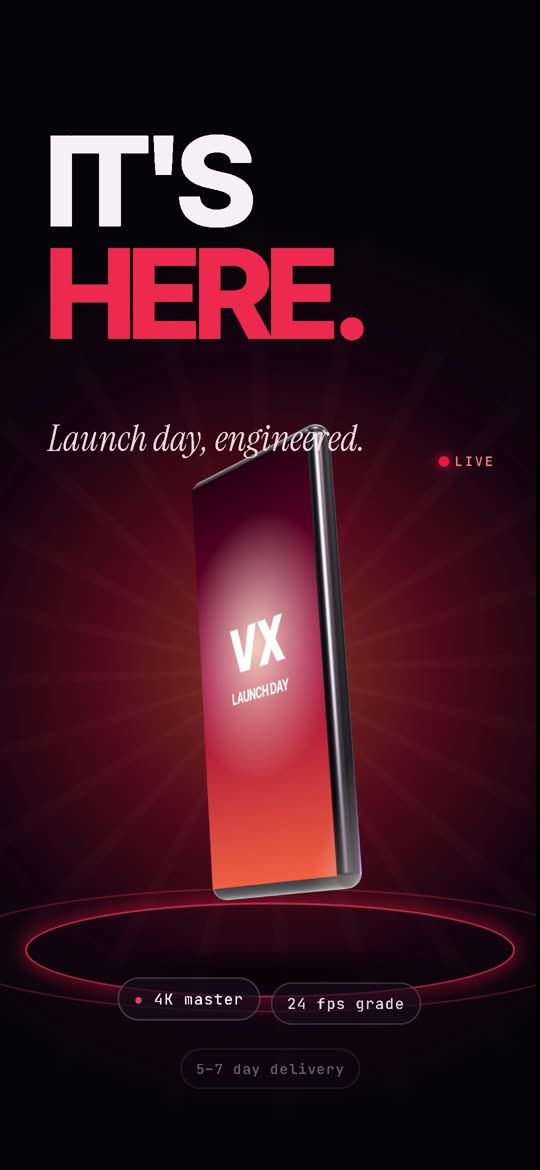
A launch video is not watched. It is survived, one second at a time, by a person with a thumb on the screen. If the first second doesn’t earn the second, nothing after it matters, however good the film is.
This is the checklist we use on every launch film to plan that opening beat.
1. Start on the product’s best moment, not its name
Logos and titles are for the end. The opening frame should be the most interesting thing the product does or looks like: a can bursting into light, a phone catching a rim light, a dropper releasing a bead of serum. Movement and light read faster than text.
2. One idea per hook
A hook promises something: a reveal, a surprise, a question. If you’re trying to land three ideas in the first three seconds, you’ve landed none. We write one hook per cut and build alternates instead of cramming.
Write three hooks. Ship the one that makes someone stop, not the one you like best.
3. Design for sound-off first
Most feeds start muted. Burned-in captions, kinetic type and clear visual beats carry the story without audio. Sound then becomes a bonus that rewards people who turn it on.
4. Cut for the placement
A 9:16 reel and a 16:9 hero film need different framing, not just different crops. Plan safe zones for UI overlays (captions, buttons, usernames) before you shoot or render.
| Placement | Ratio | Plan for |
|---|---|---|
| Reels, Shorts, TikTok | 9:16 | Top and bottom UI overlays |
| LinkedIn, feed | 1:1 | Captions inside the frame |
| YouTube, X, website | 16:9 | Widest frame, slower pacing |
| Meta feed ads | 4:5 | More vertical room than square |
5. Test hooks, not whole films
If you run paid social, change only the first three seconds between variants. It isolates what actually stops the scroll, and it’s far cheaper than producing a new film.